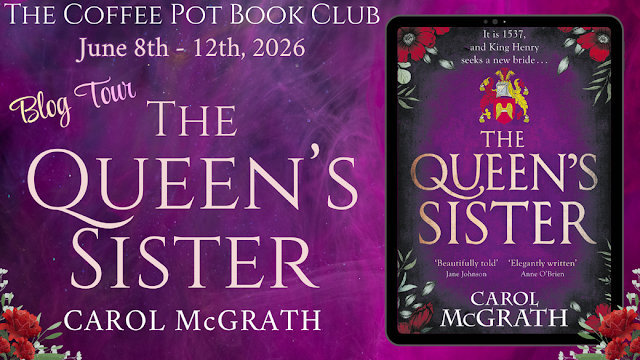
ABOUT THE QUEEN’S SISTER
A mother, a wife, a woman of substance…
At nineteen, Elizabeth Seymour is already a mother, has been recently widowed, and seen her Queen, Anne Boleyn, lose her life. Against the wishes of her father, she heads North, away from Wulf Hall and the court in London to Yorkshire, determined to establish a new beginning as a landowner and business woman. As her family in Wiltshire curry favour with King Henry, aided by Thomas Cromwell, Elizabeth makes Kexby Manor her home, finding loyalty among her people there.
Soon, news comes to Elizabeth of the King’s desires for her sister, Jane, while her brother, Edward, encourages her own betrothal to Gregory Cromwell, son of Thomas. It is a happy second marriage for Elizabeth, but it brings unwanted involvement in the dark plots and secrecy of the court, while in the wider country, changes in religious practice threaten to alter the traditions and values of all she has known…
THE QUEEN’S SISTER vividly imagines the story of the woman possibly portrayed in Hans Holbein’s beautiful painting ‘Portrait of a Lady,’ and is a colourful, meticulously researched novel of Tudor life behind the scenes.
What readers say about Carol McGrath’s novels:
‘Another beautifully crafted, well-researched work of historical fiction from Carol McGrath’
‘Brimming with intrigue, tension and adventure, The Lost Queen is a powerful Medieval tale full of atmosphere, danger and emotion and transports the reader to another world’
Buy Links:
Meet Carol McGrath
Following a first degree in English and History at QUB, Carol McGrath completed an MA in Creative Writing from The Seamus Heaney Centre, Queens University Belfast, followed by an MPhil in English from University of London. She is published by Headline.
The Handfasted Wife, first in a trilogy about the royal women of 1066, was shortlisted for the RoNAs in 2014. The Swan-Daughter and The Betrothed Sister complete this highly acclaimed trilogy.
Mistress Cromwell, a best-selling historical novel about Elizabeth Cromwell, wife of Henry VIII’s statesman, Thomas Cromwell, was republished by Headline in 2020.
The Silken Rose, first in a Medieval She-Wolf Queens Trilogy, featuring Ailenor of Provence, saw publication in April 2020. This was followed by The Damask Rose. The Stone Rose was published April 2022. The Stolen Crown 2023 and July 2024, The Lost Queen, about Berengaria of Navarre and The Third Crusade.
The Queen’s Sister, sequel to Mistress Cromwell, sees publication in June 2026. Carol writes Historical non-fiction as well as fiction. Sex and Sexuality in Tudor England was published in February 2022 by Pen & Sword. She speaks at Conferences and gives interviews.
Subscribe to her newsletter via her website (use the drop down on her web-site Home Page).
Book Review
I was sent this book for review by the publisher and it was one of the best books I’ve read about this period. Carol McGrath has a knack of immersing you in the period with the sights, smells and detail that make you believe you are there. This latest novel is about Elizabeth Seymour, Jane Seymour’s sister, a young noblewoman who is widowed and must make her own way. It gives a fascinating behind the scenes insight into how those outside the Tudor Court viewed the goings-on within the King’s orbit. Elizabeth finds out via letters that her sister has taken the eye of the King. Elizabeth had been a devotee of Anne Boieyn who has been executed, and now fears that Anne’s fate might also befall her sister. As well as this simmering in the background, there is the whole business of the destruction of the monasteries, and what that will do to the faithful – everyone must tread on eggshells so as not to go against Henry’s declaration.
The manor at Kexby is described in great detail, as is Elizabeth’s foray into the wool trade which gives us the fascinating information about preparing, weaving and the buying and selling of cloth. Elizabeth is a woman of intelligence and determination despite her young age and we cheer for her as she navigates cheating merchants who think she cannot be taken seriously as a businesswoman. Her young son Harry, who has been residing in Jersey, eventually joins her, and from her first husband she gives birth to a daughter. She remarries during the book to Gregory, son of Thomas Cromwell. Although an advantageous match, Elizabeth is mistrustful of the family because of their part in the downfall of Queen Anne.
All in all, this novel sticks entirely to the history of the period but brings to life the underlying tensions brought about by Henry VIII’s despotic reign. The story is told from Elizabeth’s point of view in the first person, and this feat of imagination provides a lively and interesting insight into a Tudor woman’s thoughts. This is a book I can highly recommend to all lovers of Tudor fiction. A fantastic novel where you will definitely learn something new about the Tudors.